
Quick answer
Make support email automation can be planned around three account categories—an email service provider, customer support software, and an AI platform—and a workflow that watches for messages, routes cases, and prepares replies. Customer support email automation with Make should keep human review for sensitive or complex cases; verified Make prices, operation limits, and exact connector steps aren’t available in the supplied claims.
Key numbers
- AI email automation can read, categorize, and respond to customer emails.
- AI email systems can prioritize messages by urgency, generate replies for common questions, and route messages to a team or agent.
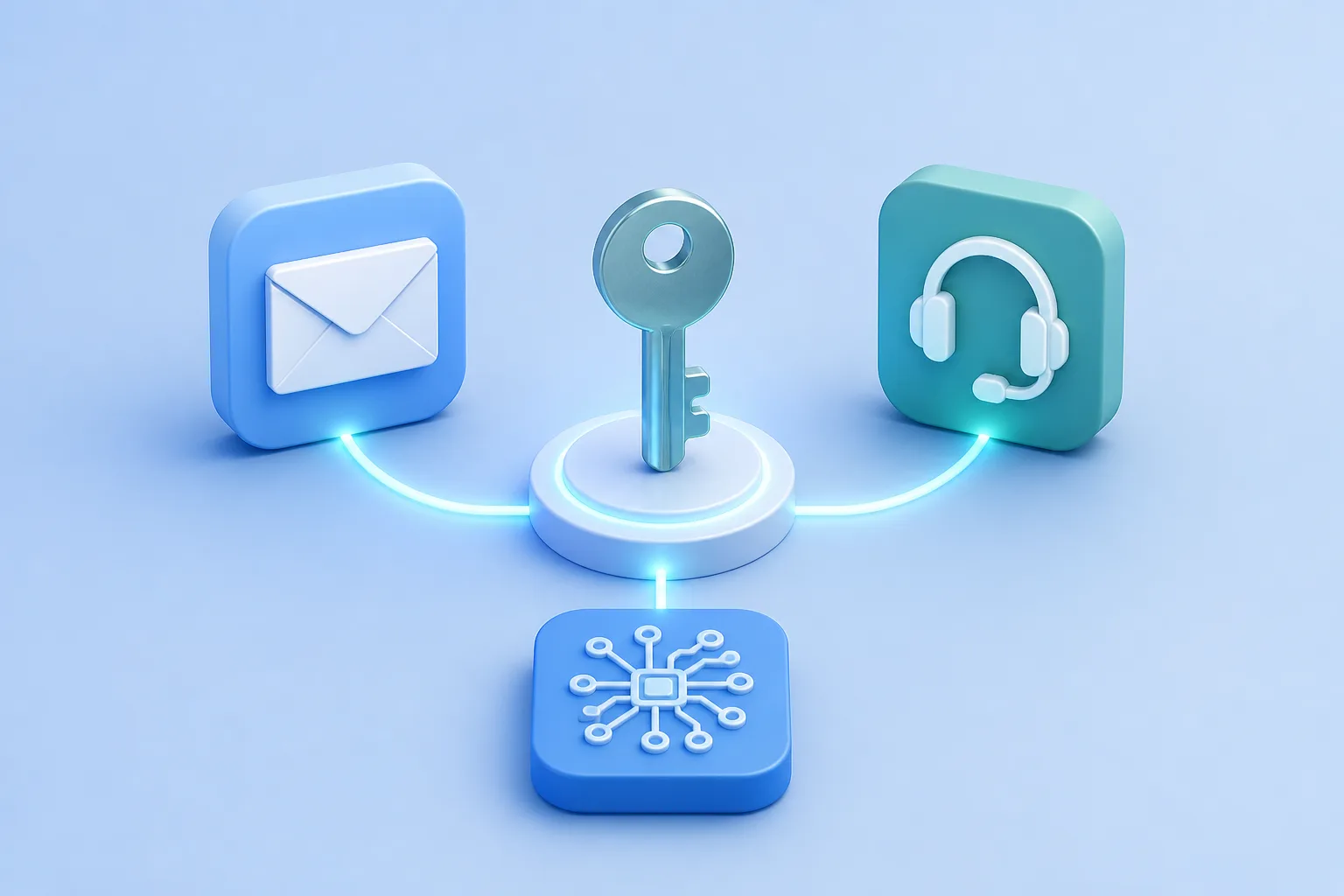
- A support setup may connect an email service provider, customer support software, and an AI platform.
- Human agents can review and approve automated responses before they’re sent.
- Deflection rate, first response time, resolution rate, customer satisfaction, and agent productivity are listed as performance metrics to track.
The short version
- Start by confirming the email, support, and AI services your workflow needs to connect.
- Use conditional logic to separate different message types and exceptions.
- Keep human review available for escalation cases and approval of automated responses.
- Track support performance using response, resolution, customer, and agent measures.
- Start small with customer support email automation, review the first replies by hand, and widen the rules once they hold up.
What customer support email tasks can Make automate, and which steps should remain under human review?
Email automation uses a system to read, categorize, and respond to customer messages. In this support workflow, you can plan for categorization, urgency prioritization, routine reply generation, and routing to a team or agent.
Keep higher-risk cases in view. Technical issues beyond basic troubleshooting, complaints, account-information requests, and legal or compliance matters may need escalation. Human agents can review and approve automated responses before they’re sent.
Use customer support Email Automation With Make: A Step By Step Setup to distinguish routine handling from cases that need judgment. The phrase customer support email automation can also label the review plan: decide which replies are drafts for approval and which cases should go to an agent. The supplied claims don’t establish which specific tasks Make can perform through a particular connected app, so confirm connector capabilities before building.

See customer support automation prices and reviews
Which email, help desk, and other app accounts or permissions are needed to connect a support workflow in Make?
A connected support workflow calls for three account categories: an email service provider, customer support software, and an AI platform. Customer support email automation should begin by identifying which services your team already uses, rather than assuming a particular app is supported.
Connecting services involves APIs, data synchronization, authentication, and authorization. Check whether your existing CRM, ticketing platform, and communication channels offer integrations that fit your needs; the supplied claim recommends prioritizing those connections but doesn’t confirm support for any named app.
A shared inbox can help your team keep track of ongoing customer conversations. For your Make scenario, document which accounts the workflow needs to access and who should be authorized to grant that access. Treat support email automation in Make as a planning label, not confirmation that an integration or permission model is available for your chosen services.
How much does customer support email automation with Make cost, and how do scenario operations affect plan limits?
The supplied claims contain no verified Make prices, plan limits, operation allowances, or build-cost ranges. There’s no supported basis here for estimating subscription costs, usage limits, implementation fees, or how a scenario’s operations affect a plan.
Keep pricing separate from the workflow design in this setup. Before committing, verify current costs and limits with the relevant provider, including any usage rules that apply to the services you plan to connect. The available information doesn’t establish which plan would suit a particular support volume.
Use customer support email automation to organize the setup questions, not to infer a price. Your support workflow can help frame what you need to check—costs, limits, and usage terms—but none of those figures are verified here. Don’t treat an unverified estimate as a Make price or operation allowance.

Hire help with customer support automation
How do you build Customer Support Email Automation With Make: A Step By Step Setup?
A Make workflow can start with the triggering tool’s watch module for an instant or time-triggered action. For customer support email automation with Make, treat the following as a conceptual sequence, not a verified list of connector modules or field mappings:
- Watch for an incoming message.
- Organize and categorize the inquiry, then create or update a support ticket.
- Prepare a reply to send or leave as a draft, according to your review process.
Automation rules can use conditional logic and branches to handle different scenarios and exceptions. Webhooks can trigger a workflow when something happens in a client system, while API calls can get, create, update, or delete data there. Organizing inquiries can help staff route questions and focus on one subject at a time.
This support workflow should be verified against the chosen services; the supplied claims don’t specify exact Make modules or mappings.

How do you create reusable support email templates and personalize replies with customer and ticket details?
Reusable response templates can insert customer data dynamically with Mustache or Handlebars. In customer support email automation, treat the template as a structure for a reply, then use only customer or ticket details your workflow can reliably access.
An autoresponder and a canned reply serve different purposes: an autoresponder can tell customers when to expect a reply and include knowledge-base links. AI tools can recognize details such as order history and past interactions, while generative AI can draft replies, summarize ticket threads, and maintain consistent tone and language.
Keep your Make scenario focused on drafting useful, relevant responses rather than assuming every message is ready for automatic sending. Support email automation in Make can include template review and approval as part of the process. The supplied claims don’t specify how to map particular customer or ticket fields in Make.

Find customer support automation experts on Fiverr
What safeguards help prevent duplicate replies, inaccurate answers, missed emails, and exposure of customer data?
Customer-data safeguards should include encryption and access controls, alongside attention to relevant laws such as GDPR and HIPAA. Real-time data synchronization is identified as important for keeping customer records accurate and up to date.
This setup should also include planning, agent training, a balance between automation and human input, and attention to privacy and empathy. The supplied claims don’t specify deduplication, idempotency, email-threading, confidence thresholds, consent, redaction, or retention procedures. Don’t describe any of those as verified Make settings based on this information.
For customer support email automation, decide which safeguards your organization needs and verify how the connected services support them. Your support workflow can document those questions for implementation review, but the available claims don’t provide product-specific instructions for preventing duplicate messages or handling sensitive data. Keep human review available where an automated answer could be inaccurate or inappropriate.
How do you test and monitor a Make support email scenario, troubleshoot failures, and route complex requests to a human?
Monitor a support workflow with measures such as deflection rate, first response time, resolution rate, customer satisfaction, and agent productivity. Customer support email automation with Make can use those measures to frame what you want to observe, but the supplied claims don’t provide a Make-specific test procedure, failure-log workflow, staged rollout, or rollback plan.
Complex requests can transition to human agents when needed. Customers should also have accessible human-support options, such as a phone number, chat link, or email address. Make those routes visible in the support experience so customers aren’t left without a way to reach a person.
Use this support workflow to identify what your team must verify before relying on the scenario. Customer support email automation doesn’t establish exact troubleshooting steps or monitoring features; confirm those details with the relevant providers rather than assuming them.
Watch: a quick walkthrough
Get customer support automation done for you
Questions teams ask us
How to write a customer service email?
A customer service email should address the customer’s question clearly and use relevant details to make the response specific. Response templates can insert customer data dynamically, and an autoresponder can set expectations and include knowledge-base links.
What does email automation do?
Email automation can read and categorize customer emails, prioritize them by urgency, generate replies for common questions, and route messages to a team or agent.
What are the C’s of customer service?
The supplied claims don’t define the C’s of customer service, so their meaning can’t be verified from the available information.
How to automate customer support?
A support workflow can connect an email provider and support software, use automation rules to handle different cases, and leave review or escalation steps for people where needed.
