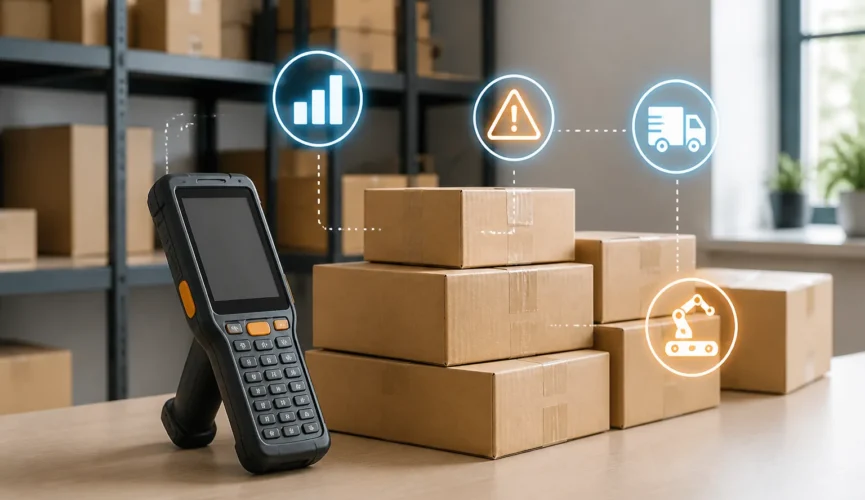
Ecommerce Automation Examples for Small Online Stores include inventory alerts, Shopify order routing, shipping updates, abandoned-cart emails, customer-support chatbots, and digital-product delivery. Rule-based workflows use triggers and actions, while AI-powered tools use machine learning and natural language processing. Abandoned-cart emails can reportedly recover up to 30% of lost revenue.
- Inventory automation can track stock in real time, update counts across sales channels, and notify teams when replenishment is needed.
- Abandoned-cart emails can have a recovery success rate of up to 30%, according to the cited source.
- Zendesk chatbots can handle up to 80% of frequently asked questions, according to the cited source.
- Klaviyo paid email plans start at £16 per month for 5,000 monthly email sends.
- Zapier connects over 7,000 apps, including Shopify, WooCommerce, and Gmail.
What are Ecommerce Automation Examples for Small Online Stores?
Ecommerce Automation Examples for Small Online Stores are software workflows that perform repetitive online-store tasks with less manual intervention. Ecommerce automation uses a trigger to start a workflow and an action to follow it. Common tasks include order processing, inventory updates, customer communications, marketing campaigns, and analytics.
Ecommerce Automation Examples for Small Online Stores can be rule-based or AI-powered. A rule-based workflow might email a product catalogue after a customer submits a form. AI-powered automation uses machine-learning models and natural-language processing rather than only fixed rules.
Useful Ecommerce Automation Examples for Small Online Stores include inventory synchronization, order fulfillment, personalized email campaigns, customer-support chatbots, product content generation, SEO product descriptions, analytics, and digital-product delivery. Digital delivery can send downloads, generate software license keys, and expire download links automatically. An Activepieces workflow can review product details in Google Sheets, scan competitor listings with Perplexity, generate product copy, and send it for review. A related demand-forecasting workflow can examine Shopify transactions alongside a Google Sheets inventory list to identify products that may need restocking.


Which ecommerce automation workflows are most useful for a small store?
Ecommerce Automation Examples for Small Online Stores are most useful when they remove repeated checks, hand-offs, and customer follow-up. Inventory automation can track stock in real time, update counts across sales channels, and notify the team when replenishment is needed. Shopify Flow can also flag low-stock products and remove listings when stock is depleted. AI-driven inventory systems can forecast demand and automate reordering.
Ecommerce Automation Examples for Small Online Stores also include order routing, shipping-label generation, customs information, tracking updates, order confirmations, shipping notifications, and delivery review requests. Fulfillment automation can route orders and update tracking information, while automated communications can send confirmations, shipping notifications, and review requests. Shiptheory can print shipping labels and customs information automatically.
Marketing workflows can send abandoned-cart reminders, product recommendations, birthday offers, re-engagement messages, welcome sequences, post-purchase tips, replenishment reminders, and win-back offers. A replenishment example sends a reminder days after a product expected to last days is purchased. Abandoned-cart emails reportedly recover up to 30% of lost revenue. Customer-support chatbots can handle order status, returns, shipping times, availability, account, and size-guide questions; Zendesk chatbots reportedly handle up to 80% of frequently asked questions. Complex disputes still need human handling.
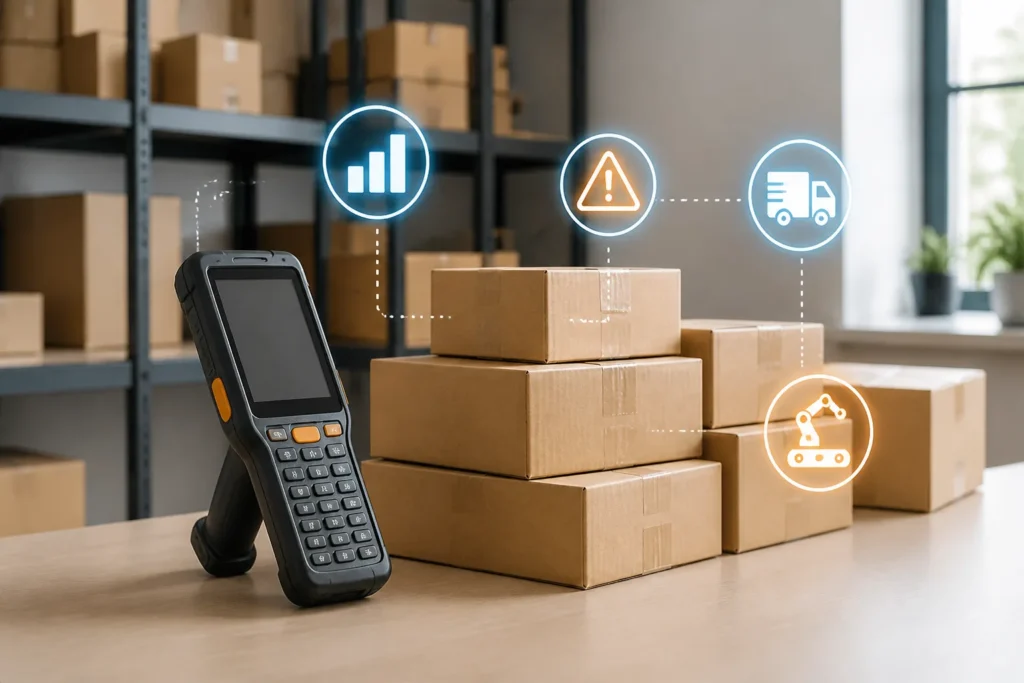
How should a small store choose automation tools based on platform, order volume, integrations, and budget?
Ecommerce Automation Examples for Small Online Stores should begin with tool selection based on platform integration, automation scope, scalability, ease of use, technical fit, and cost-effectiveness. Check whether the tool matches your team’s technical expertise, then compare the number of orders, required integrations, and complexity of your supply chain.
Ecommerce Automation Examples for Small Online Stores can use native or connected tools. Shopify Flow is designed for Shopify merchants, doesn’t require coding, and is exclusive to Shopify Plus customers. Zapier connects Shopify, WooCommerce, Gmail, and other apps without coding, with the ledger reporting more than 7,000 connected apps. Klaviyo and Omnisend support major platforms including Shopify, WooCommerce, BigCommerce, and Magento.
Smaller businesses may need only basic tools, while higher order volumes or complex supply chains may justify advanced software. Prioritize the biggest time drain, frequent hand-offs, delays, error-prone steps, and stakeholder pain points. Start with one small pilot before expanding, because the best stack depends on what you sell, how you market, and where your time drains are.
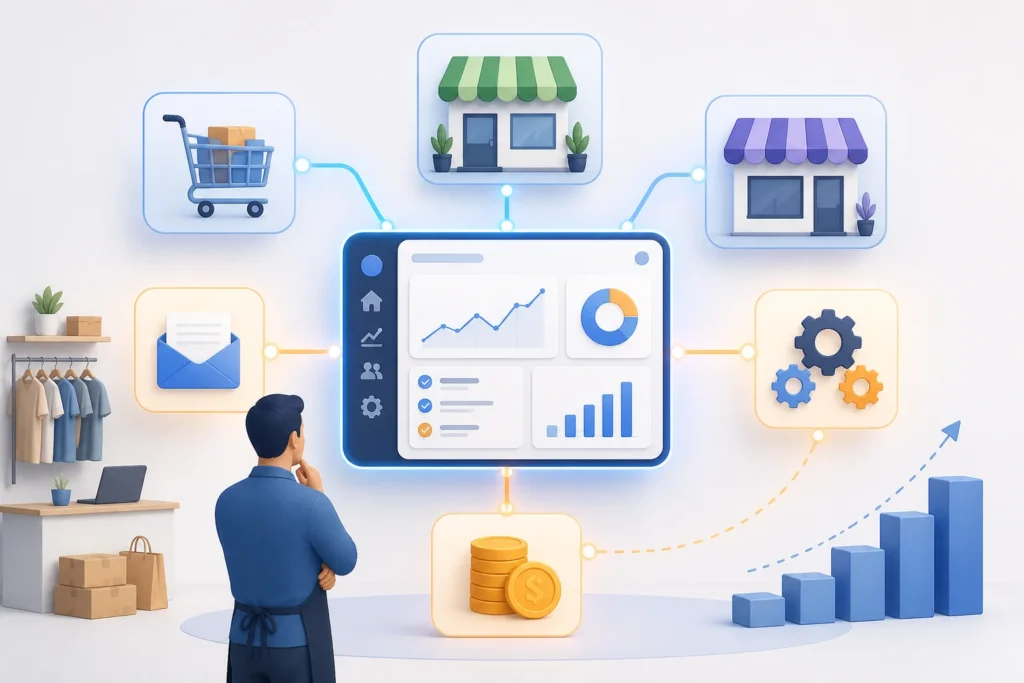
How much do ecommerce automation tools typically cost, and what can free plans do?
Ecommerce Automation Examples for Small Online Stores can cost nothing, use a low-cost plan, or require a subscription tied to business size and needs. Before choosing, check whether pricing is based on contacts, emails, or user seats. The comparison table shows source-reported plan examples, not a universal market average.
Ecommerce Automation Examples for Small Online Stores can start with free features. Klaviyo has a free plan, while paid email plans start at £16 per month for 5,000 monthly email sends. Omnisend’s examples include a free plan with segmentation, forms, and pre-built flows, plus pricing from $11.20 per month for up to contacts. Brevo’s free plan allows emails per day, Mailchimp’s allows 1,000 email sends per month, and HelpJet’s includes one bot and conversations per month.
Other source-reported examples include Automate.io at up to five automations and monthly actions for free, with paid plans from $49 per month; TradeGecko plans from £29 to £599 per month; and Easy Digital Downloads Pro from $99 per year. Measure subscription cost, setup effort, hours saved, error reduction, throughput, revenue increase, and cost avoidance. One source says automation may reclaim to hours per week.

How can a small store set up a basic ecommerce automation workflow?
Ecommerce Automation Examples for Small Online Stores should start with an audit of manual processes, frequent hand-offs, delays, error-prone steps, and stakeholder pain points. Choose one small pilot rather than changing the whole operation at once.
Ecommerce Automation Examples for Small Online Stores generally follow three steps: select a trigger, check a condition, and perform an action. For example, a new order can trigger a CRM customer record and a thank-you email through Zapier. A new subscriber or first purchase can trigger a welcome sequence.
A practical inventory pilot can connect Shopify transactions with a Google Sheets inventory list, send the transaction details for analysis, identify products that may need restocking, and issue a restock alert. Before launch, pause flows, adjust triggers, and test variants without rebuilding the workflow. Keep human review for exceptions, complex issues, disputes, and judgment-based decisions.
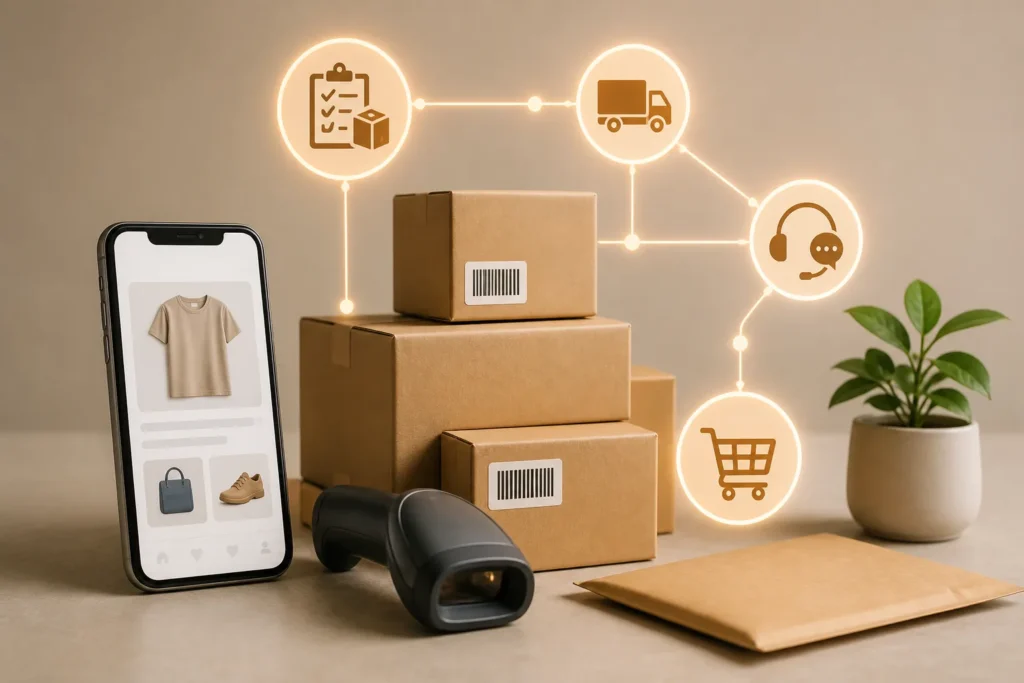

What errors, privacy issues, and customer-service problems can ecommerce automation cause?
Ecommerce Automation Examples for Small Online Stores can produce incorrect inventory counts, delayed shipping updates, pricing inconsistencies, and slow customer-service responses. A failed trigger or inaccurate data can therefore affect both operations and the customer experience.
Ecommerce Automation Examples for Small Online Stores can also reduce personalization when poorly managed. New software may require learning, setup, and maintenance, while coordinating separate email, SMS, and advertising platforms can become tedious and error-prone. Some TradeGecko users have reported order-management glitches and limited analytics, so a pilot should check those areas.
Protect customer data in transit and at rest, and respect unsubscribe choices in win-back campaigns. Where cookies apply, explicit opt-in may be required; Dynamic Yield’s “No Consent, No Cookies” feature does not use cookies without that opt-in. Keep human oversight for complex issues, disputes, and exceptions rather than automating them entirely.
Which metrics show whether ecommerce automation is saving time or improving results?
Ecommerce Automation Examples for Small Online Stores should be judged against a baseline rather than by adoption alone. During a pilot, measure hours saved, error-rate reduction, throughput, revenue increase, cost avoidance, and internal user feedback. Automated reporting can provide insight into sales performance, customer engagement, and operational efficiency.
Ecommerce Automation Examples for Small Online Stores need workflow-specific measures. For marketing, track email open rates, click-through rates, and conversions, then compare channels such as SMS and email return on ad spend. For customer and product behavior, event-based tracking examines interactions between customers and products, while ecommerce conversion and page-level analytics are available through MonsterInsights.
For operations, monitor inventory error rates, fulfillment throughput, shipping-update timeliness, and support-response coverage against the problems automation is meant to solve. For growth, track cart recovery—reported at up to 30% in one source—and post-purchase follow-up performance, including product tips, cross-sells, and review requests.

| Tool | Free plan | Paid plan |
|---|---|---|
| Omnisend | Omnisend's free plan includes advanced features such as segmentation, forms, and | Omnisend pricing starts at $11.20 per month for up to contacts and includes |
| Klaviyo | Klaviyo has a free plan | its paid email plans start at £16 per month for 5,000 monthly email sends. |
| Brevo | Brevo offers a free plan that allows emails per day. | — |
| Mailchimp | Mailchimp offers a free plan for up to 1,000 email sends per month. | — |
| Tool | Stated integrations or connections |
|---|---|
| Zapier | Zapier connects over 7,000 apps, including Shopify, WooCommerce, and Gmail. |
| Checkout Champ | Checkout Champ says it offers nearly direct integrations, including services |
| Uncanny Automator | Uncanny Automator lists connections to more than WordPress plugins and apps |
| Tool | Free-plan capability | Paid-plan example | Source claim |
|---|---|---|---|
| Omnisend | Segmentation, forms, and pre-built flows | From $11.20 per month for up to contacts; includes 3,000 monthly emails and unlimited web push | |
| Klaviyo | Free plan | From £16 per month for 5,000 monthly email sends | |
| Brevo | 300 emails per day | No paid-plan example provided in the ledger | |
| Mailchimp | Up to 1,000 email sends per month | No paid-plan example provided in the ledger | |
| HelpJet | One bot and conversations per month | No paid-plan example provided in the ledger |
Key Takeaways
- Start with the most time-consuming, error-prone workflow and run a small pilot before expanding.
- Match the tool to your ecommerce platform, integrations, technical skills, order volume, and budget.
- Check whether pricing is based on contacts, emails, or user seats before comparing plans.
- Test triggers, conditions, variants, and exception handling before launch, while retaining human review for complex cases.
- Measure time saved, errors, throughput, revenue, cost avoidance, and user feedback against a baseline.
Frequently Asked Questions
What is the/20 rule in ecommerce?
The ledger doesn’t provide a definition of the/20 rule in ecommerce, so its meaning here is unknown.
What are the C's of e-commerce?
The ledger doesn’t define the five C’s of e-commerce, so those five principles are unknown from the available evidence.
How do I automate my online store?
You can automate an online store by choosing a trigger, checking a condition, and performing an action. Examples include inventory alerts, order notifications, welcome emails, and customer-support chatbots.
What are five examples of automation?
Five ledger-backed examples are inventory updates, order processing, abandoned-cart emails, customer-support chatbots, and digital-product delivery.